- couples therapy retreats
- RETREAT THEMES
- COURSES
- TRAVEL CONCIERGE
- Blog
- Press


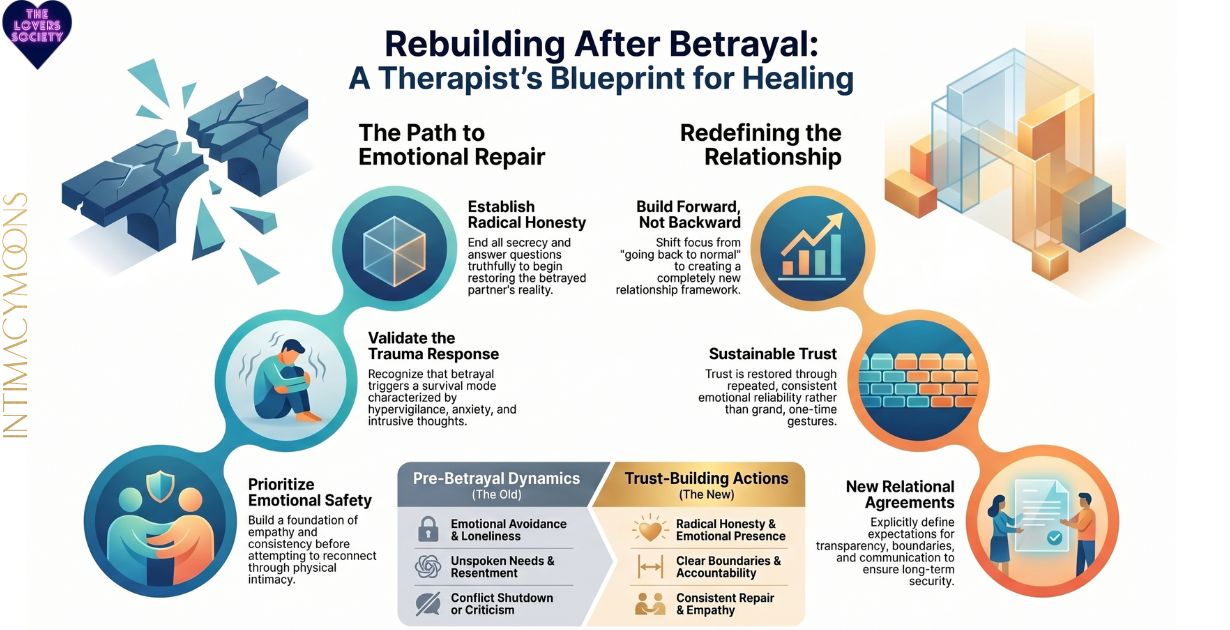
Healing after infidelity is possible, but rebuilding trust requires more than apologies or time. Couples need emotional honesty, accountability, consistent repair, and a willingness to create a healthier relationship dynamic moving forward.
Discovering infidelity can feel like the ground beneath you suddenly disappears.
For many couples, betrayal does not only break trust. It disrupts emotional safety, attachment, intimacy, and the future they imagined together. One partner may feel consumed by grief, anxiety, rage, or obsessive thoughts. The other may feel shame, guilt, defensiveness, or panic about losing the relationship entirely.
In the middle of that emotional chaos, couples often ask:
“Can we actually recover from this?”
The answer is yes. But healing after infidelity is not about pretending the affair never happened or forcing forgiveness before trust has been rebuilt.
Recovery happens when both partners are willing to engage in honest repair, emotional accountability, and deeper relational understanding.
In my work with couples, I often remind people that trust is not rebuilt through grand gestures. It is rebuilt through consistency, emotional safety, and repeated moments of honesty over time.
Also check out our post on Healing After Infidelity: First Steps for Couples to Rebuild or Move Forward
Yes, but rebuilding trust requires creating a new relationship rather than trying to return to the old one.
Many couples want to “go back to how things were before.” The challenge is that the relationship that existed before the betrayal may have already contained unresolved disconnection, emotional avoidance, loneliness, or unspoken resentment.
This does not excuse infidelity. Betrayal is still deeply painful and damaging.
But healing often requires couples to honestly explore the emotional patterns, communication breakdowns, and unmet needs that existed before the affair occurred.
For some couples, the betrayal becomes the moment that exposes problems they had both been avoiding for years.
Common underlying dynamics may include:
[Internal Link: Emotional Intimacy & Communication Resource]
Understanding these dynamics does not remove accountability from the unfaithful partner. Instead, it creates space for meaningful repair rather than endless cycles of blame and defensiveness.
Trust cannot heal while deception continues.
One of the most painful aspects of infidelity is often the secrecy surrounding it. Many betrayed partners describe feeling emotionally destabilized not only by the affair itself, but by the lying, minimizing, gaslighting, or withheld information that followed.
Rebuilding trust requires radical honesty.
That may include:
What many betrayed partners are truly asking is:
“Can I emotionally trust what is real again?”
That emotional safety matters deeply.
The unfaithful partner’s willingness to tolerate discomfort, answer difficult questions, and remain emotionally present during painful conversations becomes an essential part of rebuilding trust.
Many people underestimate the emotional impact of infidelity.
After discovering betrayal, the nervous system often shifts into survival mode. Betrayed partners may experience:
This response is common after attachment trauma.
One of the biggest mistakes couples make is trying to rush forgiveness or “move on” before the injured partner has had space to process the emotional shock.
Healing requires room for grief.
In therapy, I often explain that the betrayed partner is trying to make sense of a reality that suddenly no longer feels emotionally safe or predictable.
That process takes time.
External References:
After infidelity, some couples attempt to reconnect physically before emotional trust has been restored.
But emotional safety is the foundation of intimacy.
Without emotional repair, physical closeness can sometimes feel pressured, performative, or emotionally unsafe for the betrayed partner.
Emotional safety often includes:
Many couples have never learned how to emotionally repair conflict in healthy ways. Instead, they may rely on avoidance, defensiveness, shutdown, or criticism.
Healing after infidelity requires learning new relational skills together.
You can also check out our previous post and watch the video on How to Communicate without Blame: Building Emotional Safety in Your Relationship
One partner may need reassurance and transparency. The other may need support learning how to stay emotionally engaged without collapsing into shame or defensiveness.
These are not signs that the relationship is failing. They are signs that the relationship needs new tools.
One of the hardest parts of affair recovery is exploring why the betrayal happened in the first place.
This is not about justifying the betrayal. It is about understanding the emotional and relational dynamics that contributed to it so the same patterns do not continue.
Affairs are rarely only about sex.
Sometimes they are connected to:
In some relationships, infidelity becomes an unhealthy attempt to escape emotional pain, insecurity, or disconnection rather than address it openly.
Healthy accountability means the unfaithful partner fully owns their choices while both partners work to understand the broader relational context together.
That distinction matters.
Healing after infidelity often requires couples to redefine the relationship intentionally.
Many couples realize they were operating on assumptions rather than clearly communicated expectations.
Rebuilding trust may involve conversations around:
The goal is not control or surveillance.
The goal is creating trustworthiness and emotional security together.
Healthy trust is not built through constant monitoring. It is built through consistent emotional reliability over time.
Couples who successfully recover from infidelity often describe becoming more emotionally honest and intentional than they were before the betrayal occurred.
Infidelity recovery can become emotionally overwhelming without support.
A trained couples therapist can help couples:
For many couples, both individual therapy and couples therapy are beneficial during the healing process.
Seeking support is not a sign of weakness. It is often one of the healthiest decisions couples can make during a deeply painful season.
I often say that for couples going through post-affair recovery, the format of relationship support really matters more than almost every other relationship issue. That's because you need a concentrated intervention sufficient enough to achieve clarity on the path forward. Not just an hour a week effort buried within a week's worth of cumulative challenges and resentment.
If you are ready to begin rebuilding emotional connection in a more intentional and supported way, explore our Private Couples Therapy Retreats designed to help couples heal after betrayal and reconnect with clarity, safety, and compassion.
You can also explore The Ultimate Guide to Couples Therapy Retreats if you want to do more research.
Many people imagine trust returning all at once.
In reality, trust rebuilds slowly through repeated emotional experiences.
It looks like:
Trust is rebuilt through consistent actions more than reassuring words.
Over time, many couples discover that healing is not about recreating the old relationship. It is about building a healthier and more emotionally honest one.
Infidelity changes a relationship, but it does not automatically have to end it.
For some couples, recovery becomes an opportunity to finally address years of emotional disconnection, avoidance, unmet needs, or unhealthy communication patterns that were never fully acknowledged before the betrayal.
Healing takes time.
It takes accountability.
It takes emotional honesty from both partners.
Most importantly, it requires patience with the process.
If you are navigating the pain of infidelity right now, know that you do not have to navigate it alone.
With support, intentional repair, and emotional willingness, trust can be rebuilt one honest moment at a time.
Post-Affair Recovery
rebuilding trust after cheating, healing after infidelity, affair recovery, trust after betrayal, couples therapy for infidelity, can a relationship survive cheating, emotional healing after an affair
Back to Blog