- couples therapy retreats
- RETREAT THEMES
- COURSES
- TRAVEL CONCIERGE
- Blog
- Press


There is a painful moment that happens in so many relationships that nobody really prepares us for.
One person reaches for connection.
The other hesitates.
And suddenly, what could have been a conversation becomes a story.
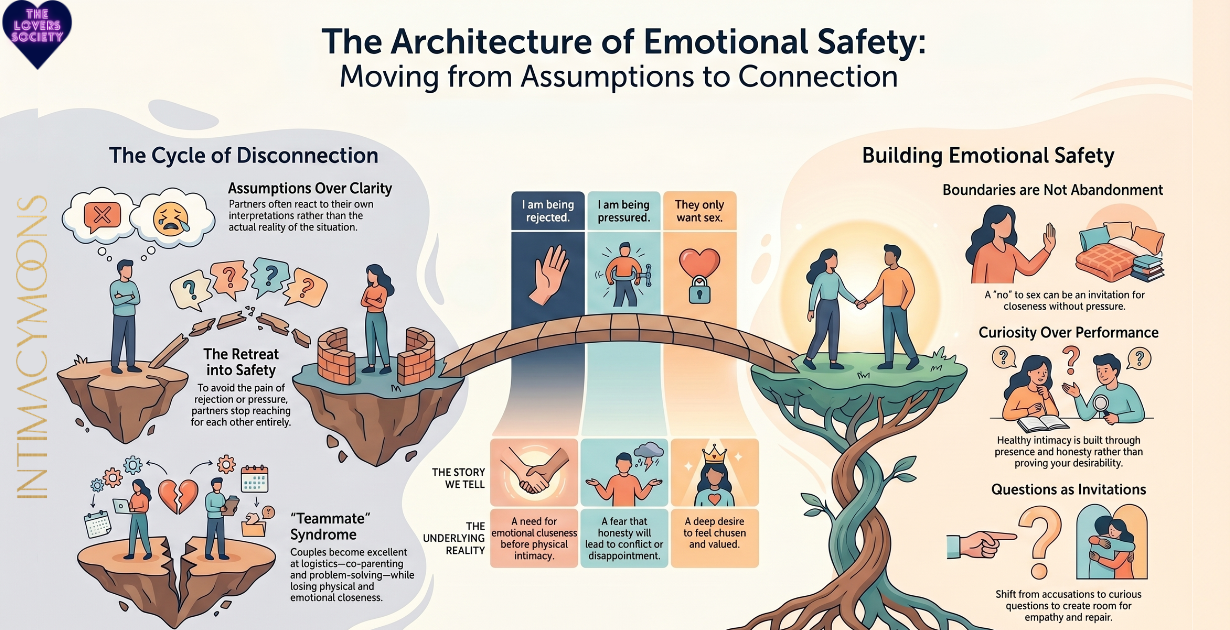
“I’m being rejected.”
“I’m disappointing them.”
“They only want sex.”
“They don’t want me anymore.”
As a couples and sex therapist, I see this dynamic every single week in my practice. Not because couples do not love each other. Most deeply do. But because intimacy is emotional terrain. It carries our fears, insecurities, hopes, stress, longing, and attachment wounds all at once.
A new study is helping us understand something important about why these moments become so emotionally loaded. Researchers found that sexual arousal can make people more likely to interpret unclear signals as romantic or sexual interest. In other words, when desire is activated, ambiguity can start to feel like certainty.
That matters in dating.
But honestly, I think the bigger conversation is what happens inside long-term relationships.
Because this is where couples quietly begin missing each other emotionally while standing right beside one another.
Many couples are not arguing about intimacy itself.
They are arguing about the meaning they attach to intimacy.
One partner may think:
“If they wanted me, they would initiate.”
The other may think:
“If I say no, I’m going to hurt them.”
One person feels rejected.
The other feels pressured.
And over time, both people begin protecting themselves instead of understanding each other.
This is one of the biggest communication breakdowns I see in relationships, assumption.
We assume we know what our partner means.
We assume we know why they pulled away.
We assume silence means rejection.
We assume hesitation means disinterest.
But assumption is rarely intimacy.
Clarity is.
When couples stop asking honest questions, they start reacting to interpretations instead of reality.
That is where emotional distance quietly begins.
One of the biggest myths about intimacy is that healthy relationships should naturally “just work.”
That desire should always be effortless.
That attraction should always feel spontaneous.
That partners should somehow instinctively know what the other person wants without having to talk about it.
But real intimacy does not thrive through mind-reading.
It grows through emotional safety.
It grows when both people feel safe enough to be honest about what they want, what they do not want, what they miss, and what they need more of emotionally.
Sometimes a partner is not avoiding intimacy because they do not love you.
Sometimes they are exhausted.
Sometimes they feel disconnected from their body.
Sometimes stress has hijacked their nervous system.
Sometimes they need emotional closeness before physical closeness.
Sometimes they are afraid that honesty will create conflict.
And sometimes the partner initiating intimacy is not simply asking for sex.
They are asking:
“Do you still choose me?”
“Do you still desire me?”
“Do we still have us?”
That is why sexual rejection cuts so deeply. It often touches our deepest fears around worthiness, desirability, and connection.
Here is what tends to happen next.
One difficult interaction creates tension.
Then both partners become more cautious.
The initiating partner stops reaching because rejection feels painful.
The other partner avoids affection because they worry it will lead to pressure or disappointment.
Eventually couples stop talking openly about intimacy altogether.
They become incredible teammates.
Co-parents.
Professionals.
Problem-solvers.
But emotionally and physically, they begin living beside each other instead of with each other.
I often say that many couples are not lacking love.
They are lacking safety around vulnerability.
And vulnerability is required for intimacy to stay alive.
One of the most healing shifts couples can make is learning that every “no” is not rejection.
A boundary is not abandonment.
And intimacy does not only mean intercourse.
A partner can say:
“I do not want sex tonight, but I do want closeness.”
“I miss you emotionally.”
“I want affection without pressure.”
“I need us to slow down.”
“I need help feeling safe in my body again.”
Those conversations matter because clarity reduces the emotional guessing game that creates resentment and shame.
The healthiest couples are not couples who never struggle.
They are couples who learn how to stay emotionally connected while navigating the struggle.
If your relationship has been stuck in cycles of misunderstanding, avoidance, or hurt around intimacy, start here:
What helps you feel emotionally connected to me?
What makes intimacy feel stressful lately?
When do you feel most desired by me outside the bedroom?
What kind of touch feels comforting versus pressuring?
What conversations are we avoiding because we are afraid of hurting each other?
What would help intimacy feel safer for both of us?
Notice these are not accusations.
They are invitations.
And invitations create room for honesty, empathy, and repair.
One of the biggest shifts I want couples to make is moving away from performance and toward presence.
Intimacy is not about proving your desirability.
It is not about hustling for worthiness.
It is not about avoiding rejection at all costs.
It is about creating a relationship where honesty can safely exist.
Where both people can say:
“This is where I am.”
“This is what I need.”
“This is what I am afraid of.”
“This is how I want to reconnect.”
Because healthy intimacy is not built through pressure, assumptions, or perfection.
It is built through clarity, emotional safety, vulnerability, and the willingness to keep choosing each other honestly.
And maybe that is the real lesson here.
Not that arousal changes perception.
But that relationships need conversations strong enough to hold vulnerability with care.
Sex Therapy
Intimacy, Communication, Desire, Emotional Safety, Sexual Rejection, Long-Term Relationships
Back to Blog